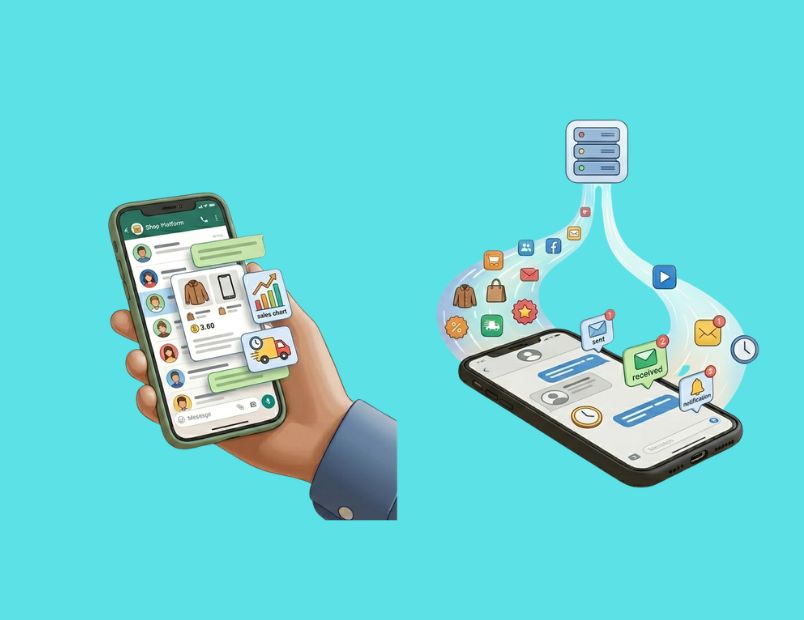
Small shops today depend on fast communication to keep customers informed about promotions, product availability, and service updates. Digital messaging has become one of the easiest ways to reach customers without spending heavily on advertising.
Two popular options for business communication are WhatsApp messaging and Bulk SMS. Many shop owners already use WhatsApp for personal communication, so it may seem like a natural choice for customer interaction. At the same time, Bulk SMS service remains one of the most reliable tools for sending alerts and promotional messages to large customer groups.
Understanding how these two channels work helps shop owners decide which one fits their daily operations better.
How WhatsApp and Bulk SMS Work
Although both WhatsApp and SMS deliver messages to customers, they operate in very different ways.
WhatsApp is internet-based, so both the business and the customer need the app and an active internet connection. Bulk SMS uses telecom networks, allowing messages to reach any mobile phone without internet or apps. This difference directly affects reach and reliability.
| Feature | Bulk SMS | |
| Technology | Internet-based | Mobile network |
| App Required | Yes | No |
| Internet Needed | Yes | No |
| Reach | WhatsApp users only | Almost all mobile users |
| Delivery | Depends on internet | Direct and instant |
WhatsApp vs. Bulk SMS Comparison and Compatibility Scenarios
When running a shop, effective customer communication can make a big difference in sales, engagement, and service quality. Two popular messaging channels are WhatsApp and Bulk SMS. Each has its strengths depending on whether you want personal interaction or broad, fast reach.
| Feature / Aspect | Bulk SMS | |
| Purpose | Conversations, customer support, engagement | Fast and wide communication for alerts, promotions, reminders |
| Message Type | Text, images, videos, voice notes, documents | Short text messages only |
| Delivery Requirement | Requires internet and WhatsApp app installed | Works on any mobile phone, no internet needed |
| Interactivity | High – allows two-way communication | Low – usually one-way communication |
| Speed | Depends on recipient availability and connectivity | Instant delivery to all recipients |
| Cost | Depends on internet/data usage | Usually per-message, cost-effective for bulk sending |
| Best For | Customer support, personalized offers, feedback | Mass notifications, urgent alerts, appointment reminders, marketing campaigns |
WhatsApp Messaging
WhatsApp works best for building engagement and supporting customers directly. You can share images, videos, documents, and even voice messages. It is ideal for personalized offers, interactive conversations, and customer feedback. However, it relies on the customer having the app and an active internet connection.
Bulk SMS
Bulk SMS is designed for fast, wide-reaching communication. Messages reach any mobile phone without requiring apps or the internet. This makes it perfect for sending urgent updates, appointment reminders, promotions, and alerts to a large audience quickly and reliably.
Choosing the Right Option
- Use WhatsApp when engagement, conversation, or media sharing is important.
- Use Bulk SMS when speed, reliability, and mass reach are the priority
Reach and Accessibility
One of the biggest differences between WhatsApp and Bulk SMS is how widely messages can reach customers.
With WhatsApp, customers must have the app installed, an active internet connection, and must allow messages from the sender. If any of these conditions are not met, the message may not reach or be seen on time.
Bulk SMS removes these limitations. Messages are delivered directly through telecom networks and can reach any mobile phone, including basic devices without internet.
In practical scenarios, this makes a clear difference. A shop announcing a flash sale through WhatsApp may miss customers who are offline, while an SMS will reach almost everyone instantly. For businesses aiming for full coverage, SMS provides a much broader and more dependable reach.
Delivery Reliability
Delivery reliability is critical when timing matters.
WhatsApp messages depend on internet connectivity. If the customer is offline, the message remains pending until they reconnect. This delay can reduce the effectiveness of time-sensitive communication.
SMS, on the other hand, is delivered through telecom operators and typically reaches customers within seconds, regardless of internet access.
This reliability becomes important for:
- Flash sale announcements
- Payment reminders
- Order pickup notifications
- Service availability alerts
In these cases, SMS ensures the message is seen at the right moment, which directly impacts customer action.
Cost and Budget Predictability
For small shops, managing communication costs is important.
WhatsApp messaging at scale usually requires the WhatsApp Business API. This involves template approvals and a pricing model based on conversation types, which can vary depending on usage.
Bulk SMS uses a simpler pricing structure. Businesses pay a fixed rate per message, making it easy to calculate campaign costs in advance.
In real use:
- SMS allows clear budget planning before sending campaigns
- WhatsApp costs can fluctuate based on message type and interaction
- SMS does not rely on internet systems or additional setup
This makes Bulk SMS more predictable and easier to manage for day-to-day business communication.
Engagement and Open Rates
Both WhatsApp and SMS offer strong visibility, but the way customers interact with them is different.
SMS messages appear as standard phone notifications, which customers tend to check immediately. In Bangladesh, SMS open rates are typically around 90 percent to 98 percent, often within the first few minutes.
WhatsApp messages can also perform well, but they compete with personal chats and group messages. As a result, business messages may be overlooked or opened later.
In practical terms:
- SMS is better for urgent communication that needs immediate attention
- WhatsApp works well when the customer is already engaged in conversation
For time-sensitive updates, SMS consistently delivers faster visibility and response.
When WhatsApp Works Better for Shops
While SMS is effective for mass communication, WhatsApp offers advantages for certain types of customer interaction.
WhatsApp performs best in situations that require two-way communication or conversation-based support.
Examples include:
- Customer inquiries about product availability
- After-sales support or troubleshooting
- Personalized recommendations or product discussions
- Sharing images, catalogs, or product demonstrations
WhatsApp allows shops to maintain conversational communication with customers, which can improve customer service.
For businesses that want to build ongoing conversations with individual customers, WhatsApp can be very useful.
When Bulk SMS Works Better for Shops
Bulk SMS works best when the goal is fast, reliable communication at scale. For most shops, daily operations depend on reaching many customers instantly without depending on internet access or app usage. This is where SMS becomes a practical advantage, not just a messaging option.
SMS is particularly effective in situations where timing and visibility directly impact sales or operations:
- Promotional offers and discount campaigns
SMS ensures offers reach customers immediately. Since most messages are read within minutes, limited-time deals and flash sales can drive quick foot traffic and faster purchase decisions. - Limited stock and urgency alerts
When inventory is low or a popular product is back in stock, SMS helps create urgency. Customers are more likely to act quickly when they receive a direct notification. - Store announcements and updates
Whether it is a new branch opening, a holiday schedule, or a sudden change in business hours, SMS guarantees that customers are informed without delay. - Order and service notifications
Messages like “Your order is ready” or “Service completed” reduce confusion and improve customer experience by providing clear, timely updates. - Payment and due reminders
SMS is highly effective for reminders because it is direct and hard to miss, helping businesses improve collection rates and reduce follow-ups.
What makes Bulk SMS more valuable is not just reach, but operational efficiency. Instead of calling customers individually or relying on platforms with limited visibility, businesses can send one message to hundreds or thousands of customers at once.
Modern Bulk SMS platforms add another layer of value through automation:
- Scheduled campaigns ensure messages go out at the right time without manual effort
- Recurring reminders can be set for regular services or follow-ups
- Delivery reports help track which messages were successfully delivered
- Segmented messaging allows shops to target specific customer groups with relevant offers
For small and medium shops, this means less time spent on manual communication and more consistent customer engagement.
Automation and Business Tools
Bulk SMS platforms provide several tools that support business communication. These tools help shops manage customer messaging more efficiently.
Common features include:
- Message scheduling:
Shops can plan promotional campaigns in advance and send them automatically. - Delivery reporting:
Businesses can check whether messages were delivered successfully. - Mass messaging:
Shops can send updates to hundreds or thousands of contacts at the same time. - Automation:
Some systems allow automatic messages for order confirmations or reminders.
These features make SMS particularly useful for operational communication and marketing campaigns.
Practical Considerations for Small Shops
When choosing between WhatsApp and Bulk SMS, shop owners should consider how they communicate with customers on a daily basis.
If the goal is to handle customer conversations or provide support, WhatsApp may be more suitable. The platform allows interactive communication and multimedia sharing.
If the goal is to send promotions, reminders, or announcements to many customers quickly, Bulk SMS usually provides better efficiency.
Many businesses find that combining both channels works best. SMS can be used for alerts and promotions, while WhatsApp handles customer conversations.
Final Thoughts
Both WhatsApp and Bulk SMS play important roles in modern business communication. Each platform offers unique advantages depending on how a shop interacts with customers.
WhatsApp works well for conversations, customer support, and personalized interaction. Bulk SMS performs better for mass notifications, promotions, and operational alerts that require reliable delivery.
For most small retailers, the best strategy is to understand the strengths of each channel and use them accordingly. By choosing the right communication method for each situation, shops can keep customers informed, increase engagement, and support daily business operations more effectively.